
Hands-on engineeringfor your campus.
Practical programs for engineering colleges, from C++ and data structures to full stack, cloud and security. Choose by year, branch and the project students will finish.
I am…
- Programs
- 13
- Delivery formats
- 5
- Career maps
- 70
- AI pathways
- 12
13 programs
Start with a branch, or filter by year, level and outcome. Your choice stays in the address bar, so Back and refresh keep it.
Programming & CS Foundations
Beginner · 1st year – 2nd year · Open to all branches
Leads to: Software Engineer, Data Analyst
- C and C++
- Data structures
- Algorithms and complexity
- Git basics
- Prerequisites
- None beyond basic maths
- Format
- 2-day workshop, 6-week batch or semester
- Assessed output
- Solved problem set and a small C++ project, assessed by timed coding test
Full Stack Web Development
Intermediate · 2nd year – 3rd year · Open to all branches
Leads to: Full Stack Developer, Frontend Developer
- Python and TypeScript
- React front ends
- REST APIs
- SQL databases
- Prerequisites
- Any one programming language
- Format
- 6-week batch or semester
- Assessed output
- Deployed web app, assessed by live demo and code walkthrough
- Optional extension
- Python to AI agents
AI / ML & Data Science
Intermediate · 2nd year – Final year · Open to all branches
Leads to: Data Analyst, Data Scientist & ML Engineer
- SQL and pandas
- Statistics
- Supervised learning
- Model evaluation
- Prerequisites
- Python basics, school statistics
- Format
- 6-week batch or semester
- Assessed output
- Analysis notebook and model on a real dataset, assessed by presentation
- Optional extension
- SQL to GTM engineering
Emerging Technologies
Beginner · 2nd year – 3rd year
Leads to: IoT & Embedded Engineer
- IoT and sensors
- Embedded systems
- Edge computing
- AR/VR basics
- Prerequisites
- Basic electronics
- Format
- 2-day workshop or 6-week batch
- Assessed output
- Sensor device sending live data, assessed by bench demo
- Optional extension
- IoT to Edge AI
Software Development Tools
Beginner · 1st year – 3rd year · Open to all branches
Leads to: QA & Test Engineer, Full Stack Developer
- Git workflows
- Testing frameworks
- Debuggers and profilers
- AI coding assistants
- Prerequisites
- Any one programming language
- Format
- 1–2 day workshop
- Assessed output
- A tested, version-controlled repository, assessed by review
Placement Preparation
Advanced · 3rd year – Final year · Open to all branches
Leads to: Software Engineer
- Aptitude practice
- Coding interview drills
- Resume review
- Mock interviews
- Prerequisites
- One completed programming course
- Format
- 4-week batch
- Assessed output
- Interview-ready resume and mock interview record. No placement is guaranteed
Agentic AI Development
Advanced · 3rd year – Final year · Open to all branches
Leads to: AI Engineer, Forward Deployed Engineer
- Function calling
- Workflow orchestration
- Approval gates
- Tracing and evaluation
- Prerequisites
- Python and REST APIs (open to any branch that knows Python)
- Format
- Multi-week batch; a workshop can cover function calling
- Assessed output
- A working agent for one bounded task with traces, assessed on a test set
- Optional extension
- Agents to AI workflow engineering
Soft Skills & Professional Development
Beginner · 1st year – Final year · Open to all branches
- Technical writing
- Presentations
- Teamwork
- Workplace communication
- Prerequisites
- None
- Format
- 1-day workshop or 4-week batch
- Assessed output
- Recorded presentation and written report, assessed by rubric
Hackathons & Innovation
Intermediate · 2nd year – Final year · Open to all branches
- Problem statement design
- Team formation
- Mentored build sprints
- Judging rubrics
- Prerequisites
- Basic programming or hardware skills
- Format
- 24–48 hour event with prep sessions
- Assessed output
- Working prototype and pitch, judged against a published rubric
Project-Based Learning
Advanced · 3rd year – Final year · Open to all branches
- Project scoping
- Milestone reviews
- Peer review
- Demo day
- Prerequisites
- One completed core program
- Format
- Semester-long supervised project
- Assessed output
- Capstone project with documentation, assessed by viva and demo
- Need something else?Plan a custom batch
Delivered as 5 delivery formats, with a Latest Technology Trends briefing. See all programs.
How a program runs
Four stages, agreed in writing before the first session, in one of three formats. Durations are indicative and agreed with your department.
Scope the cohort
Year, branch, batch size, lab availability and what students already know.
Agree the plan
Topics, format, calendar around exams and the assessed output, in writing.
Guided labs and review
Hands-on sessions with milestone checks; progress shared with the faculty coordinator.
Assess and hand over
Rubric-based assessment, student work, attendance and a short report to the department.
Compare delivery formats
| Compared item | Workshop | Training batch | Semester program |
|---|---|---|---|
| Typical length | 1–2 days | 4–8 weeks | One semester |
| Best for | Trying a subject or a faculty session | Building skill to a finished project | Syllabus-aligned practical learning |
| Student output | A small working build | A completed, demoed project | A supervised, documented capstone |
| Assessment | End-of-day build check | Milestones and final assessment | Rubric agreed with the department, viva and demo |
| Reporting | Attendance | Weekly attendance and progress | Progress, assessment and showcase report |
What students build
Example briefs that show the kind of work students complete.

Full stack
Campus store e-commerce app
Product catalogue, cart, order flow and a staff view for the college stationery counter.
Read the brief: Campus store e-commerce app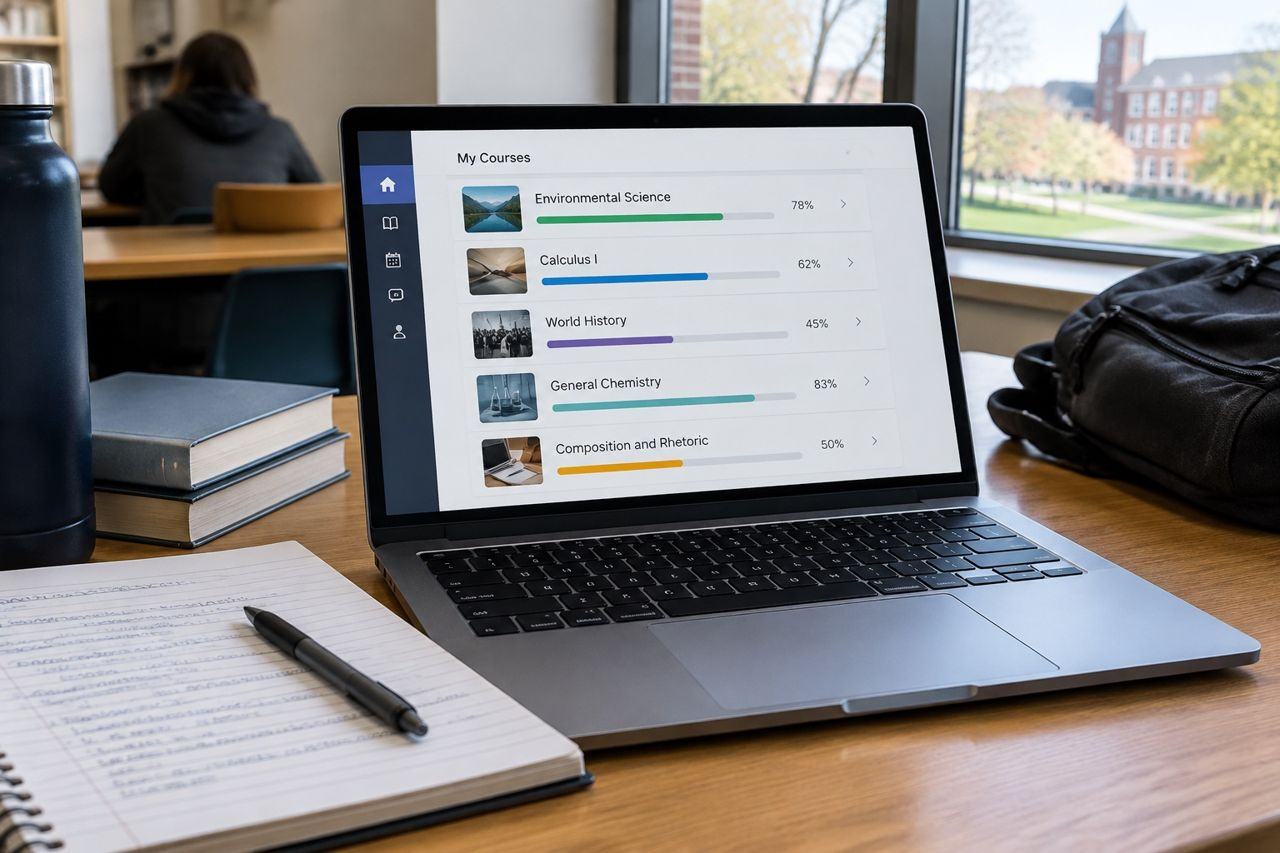
Full stack
Course portal (mini LMS)
Faculty publish material and assignments; students submit work and track progress.
Read the brief: Course portal (mini LMS)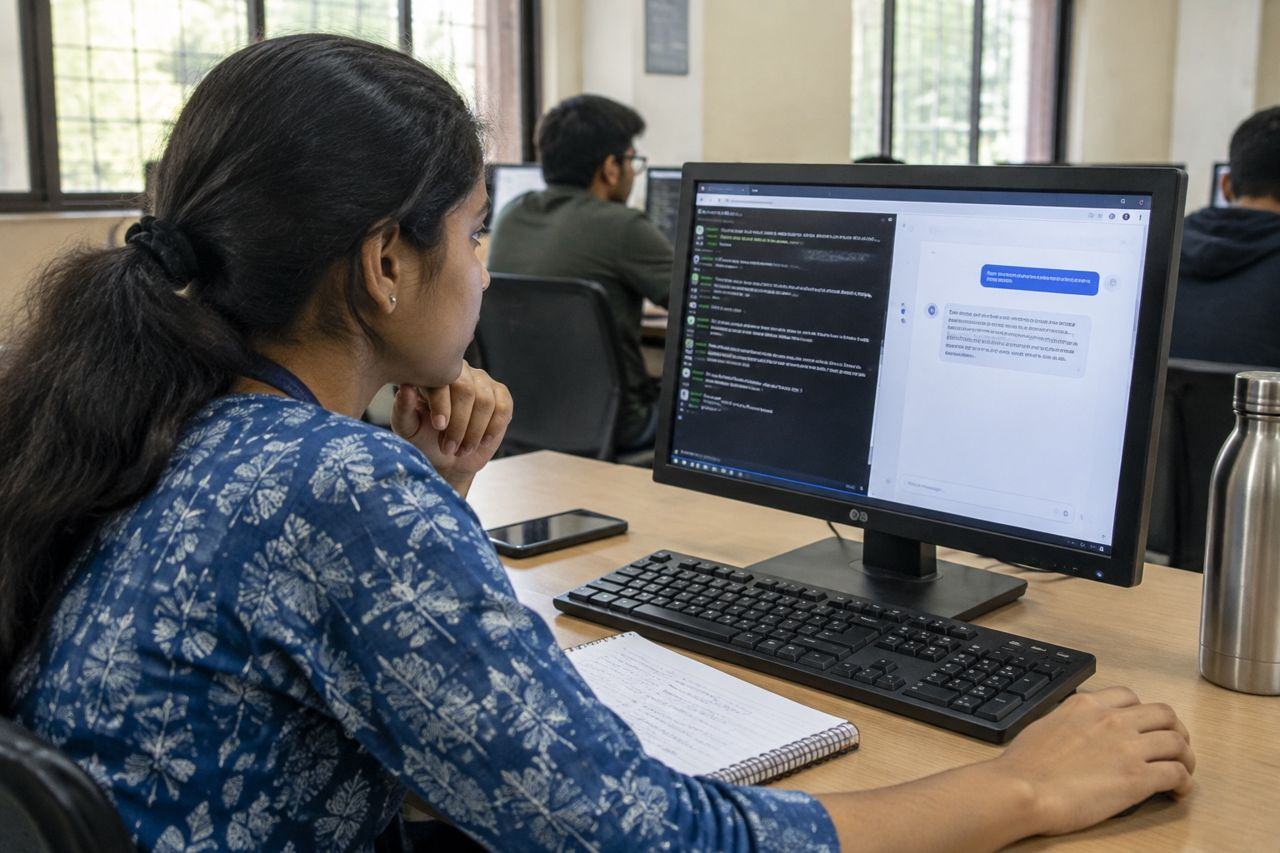
Python and AI
Department FAQ chatbot
Answers admission and exam questions from approved documents and hands unknown questions to staff.
Read the brief: Department FAQ chatbot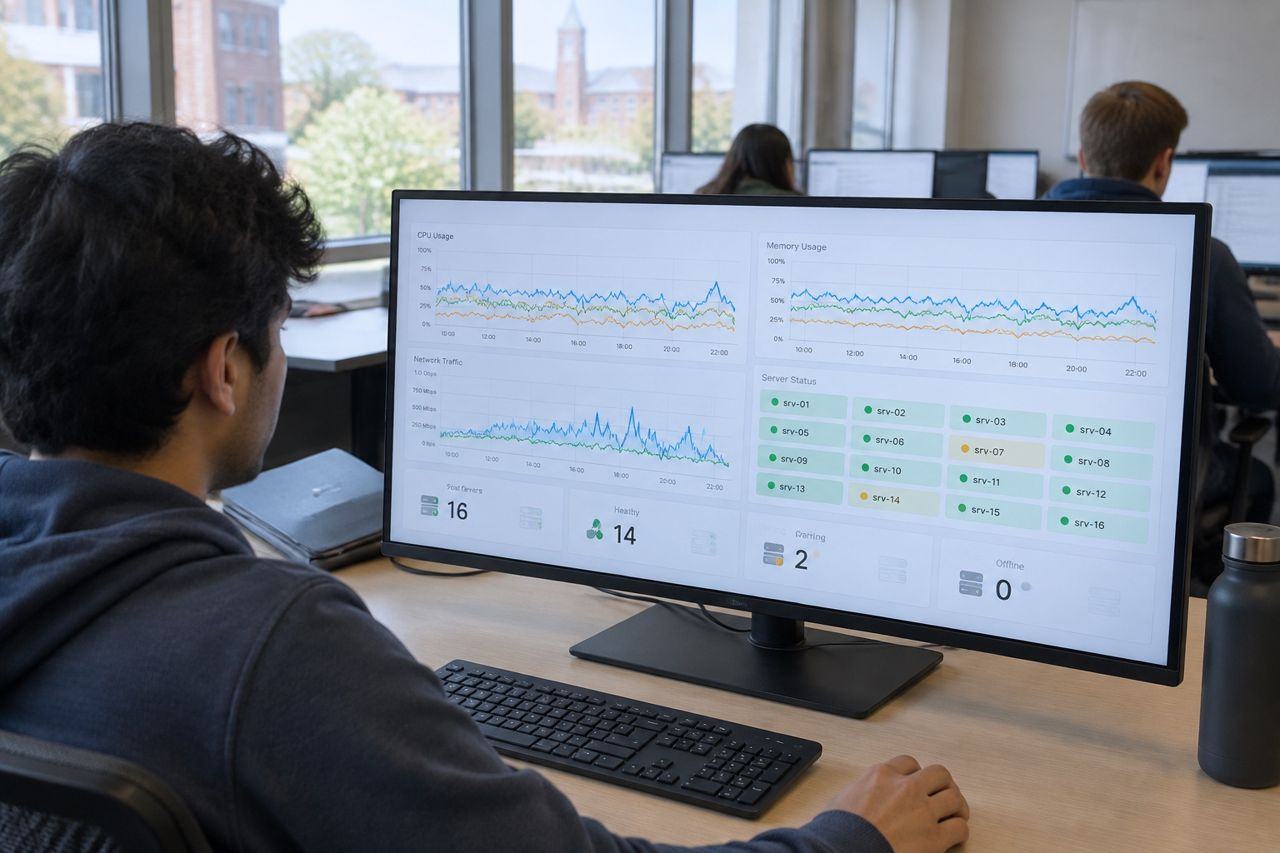
Cloud and DevOps
Cloud deployment and monitoring dashboard
Containerise a student app, add CI/CD, and build a dashboard that shows health, errors and load.
Read the brief: Cloud deployment and monitoring dashboard


Career map
Students: see the road to your first role
Pick a role and follow the stops. Every stop ends in something you build.
Bridging the classroom and the workshop floor
Many students graduate with strong theory but little time on real tools, real projects and real review. Our trainers run structured, hands-on sessions in your own labs, alongside a faculty coordinator, scheduled around internal exams and holidays.

The gap
Syllabus lags practice
Syllabus-aware curriculum: practical units planned to complement your course outcomes, using current industry tools and workflows.
The gap
Limited specialist faculty
Trainers supplied for your batch: practitioners screened for the subject, with a teaching demo before they are assigned.
The gap
Lecture-heavy learning
Hands-on from the first hour: students build, debug and present, and trainers review the work.
The gap
Projects without review
Assessed outputs: every program ends in a project, demo or test assessed against a rubric agreed in advance.
The gap
Late placement preparation
Aptitude, coding drills, resume review and mock interviews, planned early. Practice, not promises.
The gap
One-off events, no continuity
One plan, many programs: foundations, projects, hackathons and placement prep under one coordinator, delivered on your campus.
Questions from departments
Short answers to what HoDs, TPOs and principals ask before planning a batch.
Plan a batch for your department
Send the year, branch, batch size and preferred dates. We reply with a suitable format and a draft schedule.